A small terminal tool that makes your CLI toolchain explorable — and the one fortunate fact behind it.
In the previous post I argued that the environment an AI works in has to stay visible to whoever shapes it — and that, in software, the command line is one of the harder parts to see. Let me show you the small tool I built for exactly that.
You know the wall I mean. You open a powerful command you don't use every day — kubectl, say, or the Azure CLI — and to find the one thing you need, you climb down through help page after help page, subcommand into subcommand, putting the right line together one flag at a time. The power is all there. Seeing it is the hard part.
Bract is my attempt to make it visible: you browse your toolchain like a file tree, fill a command in through a form, and copy or run it.
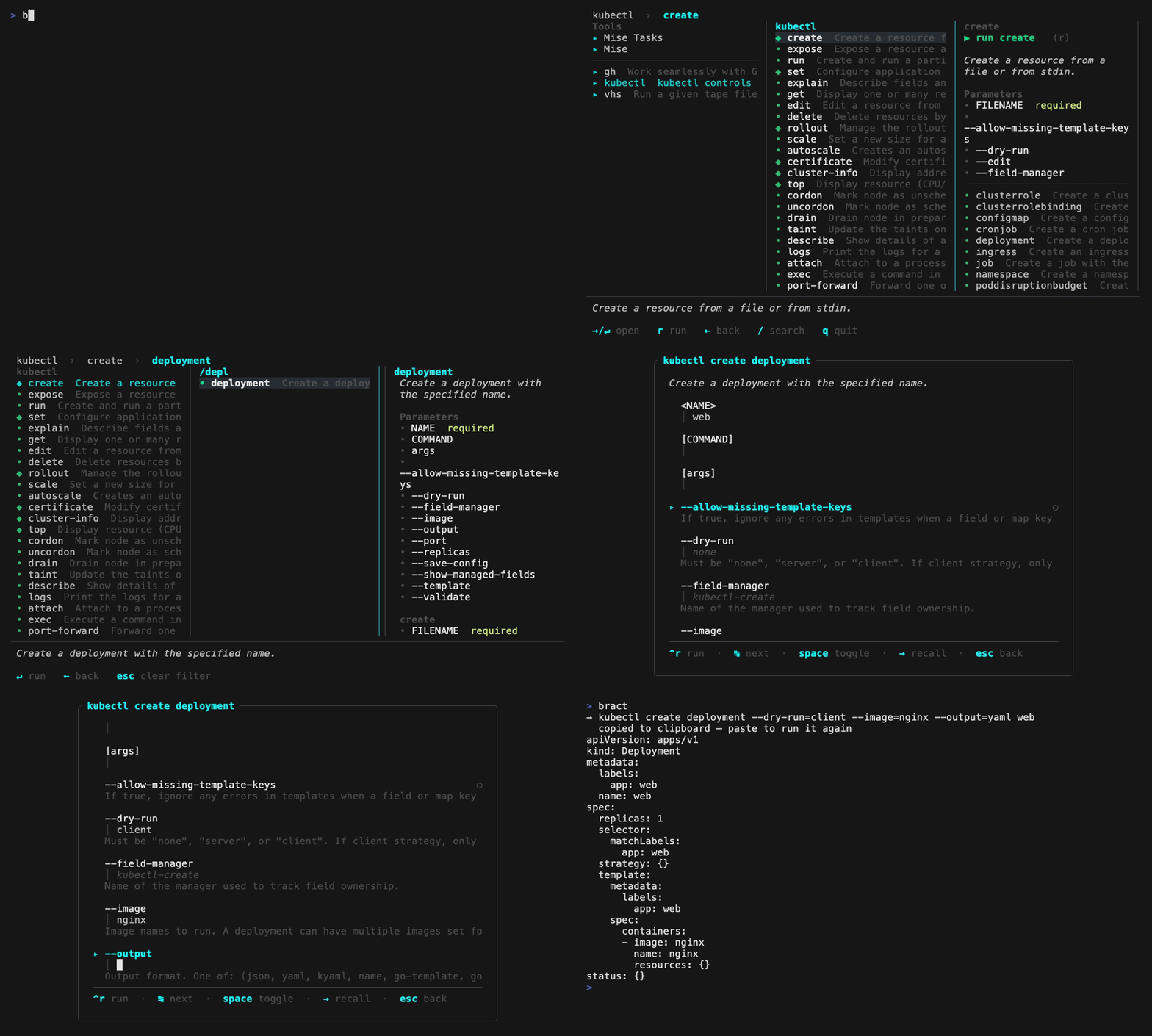
It doesn't run just anywhere, and that's on purpose. Bract reads your mise environment — and if you haven't met mise yet, you're in for a treat: it's a tool manager that pins the exact CLIs, runtimes, and tasks a project needs, so the toolchain is the same for everyone who opens the repo. mise decides what's on your factory floor; Bract is how you walk it.
Now, the obvious worry about a tool like this is coverage. There are thousands of command-line programs out there, all different, and teaching one little browser to understand each of them by hand would be hopeless. The fortunate fact is that it doesn't have to.
A lot of modern CLIs aren't hand-built anymore; they're generated by a few frameworks, and every tool built on the same framework has the same help-text shape. So you teach the framework once, and every tool built on it comes into view together. A single parser for Cobra doesn't just read kubectl — it reads helm, gh, and the hundreds of others built the same way.
I reckon this luck is recent, and it doesn't cover everything. The older tools were each written from scratch, so this approach can't reach them — even though some of them are the most loved tools on the system. It's uneven in another way, too: Cobra alone opens a huge family of tools, while a parser for Microsoft's Knack covers little more than the Azure CLI, and Usage covers mise itself and a small, hand-picked set. The idea only works where a framework became popular — but where it did, it works very well.
Bract has been really useful in my own work, and I'm putting it out because I honestly believe you could find it useful. I recommend giving it a run; the repository has everything else, including where to tell me what you find. I think you'll enjoy finally seeing the whole floor from a new perspective.